TikTok for business: how a brand gets started on TikTok with creators

Short answer
A brand can start on TikTok with its own posts or a creator collaboration, depending on goals and resources. Agree whether you are ordering a file, a post or also the option of advertising. Separate Paid partnership disclosure from rights and Spark Ads authorisation. Choose a creator by fit, and assess work acceptance separately from audience responses and sales.
TikTok for business can be developed through your own profile or by working with creators — the choice depends on whether you need content, a post or an advertising test. A paid collaboration on TikTok requires agreement on whether you are ordering a file, a post on the creator's account or advertising use of the video as well. The Paid partnership label discloses a commercial relationship but does not replace an agreement on rights. To collect applications for a specific task, create a brand account on Blogger Bank and describe the expected deliverable.
Below is a plan for a brand starting from zero: business account or creators first, which formats to choose, how to pick creators, what to put in the brief, how to plan a first test campaign and how to judge its results.
Your own account or creators first
It is not an either-or choice, but the order matters. A brand account on TikTok is a long project: it needs regular posting, someone who understands trends and patience before the algorithm starts showing videos widely. A creator brings knowledge of the format and access to their audience, but a post does not guarantee reach or sales.
- Create a business account right away — if only to claim the name, get access to analytics and be able to promote videos later. Switching to a business account is described in TikTok Help.
- Consider a test with creators — if you want to explore different ways of showing the product, compare content from suitable creators. Choose the number of collaborations according to your capacity to prepare briefs and evaluate results, not the assumption that more small accounts always work better.
- Feed your own account with what worked — the best creator videos (with their consent and as agreed in the contract) can become the starting point for your own posts and ads.
Creator content that a brand uses in its own channels is, in practice, UGC. It works especially well on TikTok because it looks like the rest of the feed rather than a TV spot.
Three formats of working with creators on TikTok
To start, you only need to know three basic models and when each makes sense.
Organic post on the creator's account
The creator publishes the video on their profile, labelled as promotional content. TikTok requires content promoting a brand to be marked with the branded content toggle — the rules are in TikTok's official help. In this model, you pay for producing and publishing the video, and the creator reaches their audience.
Spark Ads: promoting the creator's video
If an organic video performs well, you can promote it as an ad while keeping the original post, the creator's profile and viewer reactions. According to TikTok Ads Help, Spark Ads let you promote organic posts from your own account or — with authorisation — from creators' accounts. How to set it up and what to put in the contract is covered in our article on Spark Ads with creator content.
TikTok Shop and affiliate
If you sell physical products and TikTok Shop is available for your market and category, creators can recommend products and earn a commission on sales. This model suits brands that already have a store and logistics in place. More in TikTok Shop affiliate for brands.
The order depends on your goal: you can commission content alone, a post on the creator's account or agree upfront on the option of a later advertising test. Affiliate requires a separate assessment of store readiness. Good organic performance does not guarantee good paid performance.
Paid collaborations on TikTok: three separate agreements
Payment for a video, advertising disclosure and permission for further use are different matters. Confirm them separately, even if you discuss everything in one conversation. A short order form can cover these options:
- File only: the creator delivers a recording without posting it on their profile. The brand specifies the channel of use and agrees on rights; if it publishes on TikTok itself, it is responsible for the appropriate disclosure setting for that post.
- A post on the creator's account: the order includes a post on the specified account. The creator enables commercial content disclosure, and the brand checks the published post. Buying a post does not automatically allow the brand to use the video later.
- A post and possible advertising: alongside the post, agree on the scope and duration of advertising use. Before Spark Ads, also check technical authorisation. Neither proof of payment nor the Paid partnership label replaces it.
TikTok distinguishes Promotional content for your own business from Paid partnership for content about another brand. Tagging a partner can also grant advertising authorisation — check the actual settings rather than drawing conclusions from the label alone. UOKiK recommends two levels of disclosure for influencers: the platform's tool and their own clear statement identifying the advertising and the promoted brand. TikTok's rules also cover promoting your own business, although UOKiK distinguishes an explicitly commercial store profile from an influencer's profile.
The order form: file, post and possible advertising
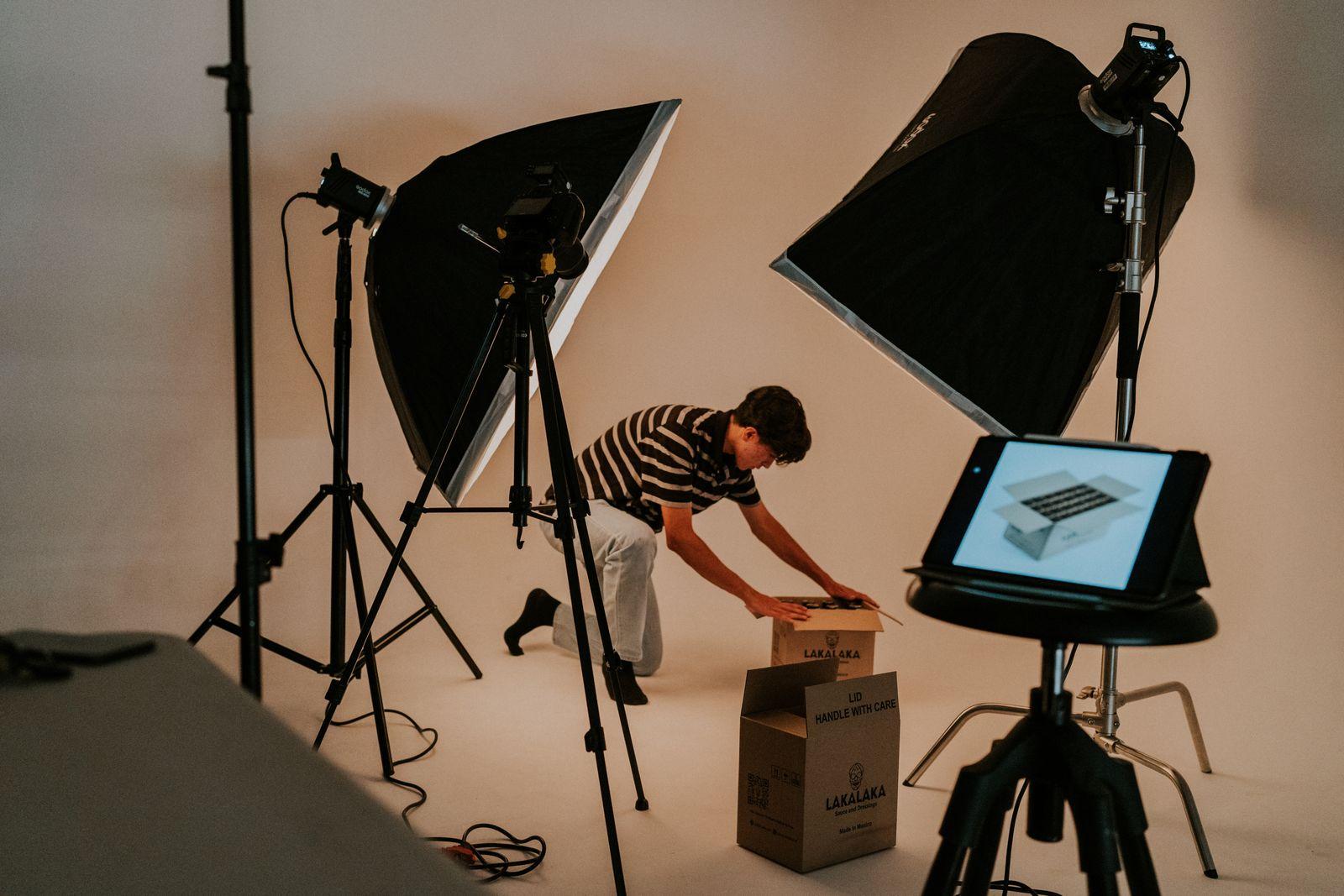
A teaching example, not a Blogger Bank campaign: a store selling organisers orders a video showing how an insert fits a drawer. First, it receives a file showing the measurements and arrangement of items. Posting on the creator's account is a separate part of the order; advertising remains an option, not a promised next stage.
- Deliverable: product name, video version, file format, delivery deadline, approver and agreed revisions. For a post, also specify the account, publication date and how the link will be delivered.
- Disclosure: who publishes, which label they enable and where viewers will see that the store is being advertised. The evidence is the actual post, not a statement in the brief.
- Further use: where and for how long the brand may use the material, whether editing is allowed and whether advertising is included. For Spark Ads, record the authorisation method and duration, and who is responsible for ending the ad delivery.
Prepare a task on Blogger Bank with these fields and compare applications against the specific assignment. The platform helps organise the task, conversation, contract and payment. It does not replace checking the scope of rights, provide legal services for the order or launch advertising for the brand.
How to accept the work without promising results
Open the final file and, if publication was ordered, the post on the agreed account too. Check the product, whether claims match the brief, captions, disclosure and agreed revisions. Attach confirmation of the scope of further use; before advertising, separately confirm active authorisation. Missing advertising rights are not a minor editing defect.
Separate acceptance of the completed work from evaluating audience responses and sales. Any commissioned report should specify the measurement period and distinguish organic from paid results if advertising has started. A video that meets the brief may bring no orders; do not present acceptance of the material as confirmation of campaign effectiveness. In the store example, first assess whether the video accurately shows the organiser, and only then what viewers did.
How to choose your first creators
Do not choose a creator solely by follower count. Several smaller creators have no guaranteed advantage over one larger creator. The 2021 IAB Poland guide links creator selection to goals and audiences. Check the topics covered, current audience statistics and the ability to demonstrate your product.
- Fit with the product, not reach. A pet food brand looks for creators in the pets category, a car accessories maker in automotive, a gadget store in technology. Their viewers are already interested in the topic.
- Watch several recent videos, not just the most popular one. What matters is whether the creator consistently holds attention and how commenters react.
- Check how the creator talks about products. If past collaborations sound read off a card, yours will too.
- Look for variety. One creator does a review, another a tutorial, a third shows the product in an everyday scene — for example at home or in the kitchen. That way the test gives you more insights.
- Ask for statistics. Request screenshots from the analytics panel: where viewers are from and how many watch to the end. That matters more than follower count.
A creator brief for TikTok
A TikTok brief should be short and give the creator freedom. A good brief says what should happen, not exactly how to film it. General principles are in the brief entry in our glossary and in the guide on how to write a brief for a creator. For TikTok, add a few things:
- One main idea. What viewers should remember. List five product benefits and they will remember none.
- The opening seconds. Ask for the product, or the problem it solves, to appear immediately — viewers decide to scroll away very quickly.
- What to avoid. Promises you cannot keep, naming competitors, sensitive topics.
- Disclosure. Remind the creator about the branded content toggle and ad labelling.
- Content rights. If you plan Spark Ads or using the video on your account, put it in the terms from the start, not after publication.
- Approval. Whether you want to see the idea before filming or the finished video before posting, and how many revision rounds you expect.
Your first test campaign, step by step
A first campaign is not meant to deliver record sales. It should answer which message and which type of creator work for your product.
- Pick one product and one goal. For example awareness of a new product or traffic to your store. Mixing goals makes evaluation harder.
- Prepare two or three message ideas. For example "problem and solution", "unboxing and first impression", "the product in a daily routine".
- Invite several creators with different styles. Assign each one idea or let them choose.
- Set a shared publishing window. Videos posted around the same time are easier to compare.
- Give each creator a separate link or code. This helps attribute some traffic and sales, but does not cover every interaction with the video. A code may be passed to someone else, and a purchase may happen later without a click.
- After publication, collect statistics — from creators and from your store analytics.
- Make a separate decision about advertising. If the goal, rights and technical authorisation allow it, consider a Spark Ads test. It is not a mandatory final stage of the pilot or a promise to repeat organic performance.
Before paid promotion, choose the placement too. A creator post determines the content, but does not settle whether you need standard In-Feed, TopView or Top Feed. Our guide to TikTok advertising placements helps separate those decisions and check availability for your campaign in Poland.
How to measure results on TikTok
Views alone say little. Look at metrics that show whether the video really held viewers and whether anything came of it:
- Retention — what share of viewers watched to the end, or at least past the first few seconds.
- Engagement — comments, saves and shares. Comments like "where can I buy this" are worth more to a brand than likes.
- Traffic and sales — link clicks, code redemptions, orders attributed to a specific creator.
- Paid performance — if the video was promoted with Spark Ads, compare it with ads produced by the brand.
Finally, write down the conclusions: which message, which type of creator and which opening worked best. That is the brief for your second, bigger campaign. We cover measurement in detail in how to measure creator campaign results.
Common mistakes brands make at the start
- Reposting a TV ad or an Instagram post unchanged.
- An overly detailed script that strips the creator of their style.
- One collaboration with one creator and the conclusion "TikTok doesn't work for us".
- No agreement on content rights, so the video cannot be promoted later.
- Judging only by view count.
How Blogger Bank solves a brand's TikTok start with creators
The hardest part of a first campaign is finding several fitting creators and running all the collaborations at once. On Blogger Bank it works like this:
- Instead of searching TikTok and messaging every creator — you describe the product, goal and format in a task, and creators apply themselves. You choose the ones who fit.
- Instead of separate contracts with each person — the contract with the chosen creator opens automatically on the terms described in the task.
- Instead of messages scattered across DMs and email — the conversation with the creator, content approval and payment are in one place, so comparing several test videos is easy.
- Instead of guessing who fits your niche — you can browse creators by category and invite specific people.
Browse creators in the influencer catalog, then create a brand account and publish your first TikTok task.
Frequently asked questions
How can a business get started on TikTok?
Start with the goal: content for your profile, a creator post and an advertising test require different agreements. Working with a creator is one option, not a guaranteed fastest start. Prepare a brief and acceptance criteria before choosing a creator.
Does a brand need its own account to work with a creator?
A brand does not need its own TikTok profile to commission a creator post. Its own channel can support regular communication. For advertising, separately check the requirements for the advertising account, chosen delivery method and content authorisation.
Does Paid partnership mean permission for Spark Ads?
The Paid partnership label discloses a commercial relationship; it is not a universal video licence. Agree rights separately and check advertising authorisation. Tagging a partner may allow authorisation, so the actual settings matter, not the label alone.
How do you choose a creator for a first collaboration?
Check audience fit with the product, presentation style and recent content. Ask for audience statistics and examples of similar assignments. Account size alone does not determine the choice; several small creators do not guarantee better results than one larger creator.
What should a creator brief include?
Specify the product, goal, format, main message, permitted claims, deadline and approval process. Include revision rules, disclosure and the scope of rights. State clearly whether you are receiving a file, a post or also permission for later advertising use.
Must a paid collaboration be disclosed?
A creator's advertising post must be clearly labelled. TikTok requires disclosure settings for brand promotion, while UOKiK recommends influencers use both the platform tool and their own advertising statement. Also check brand identification and disclosure visibility in the published post.
What should you check before completing a paid collaboration?
Receive the agreed file or check the post, account, content and disclosure. Confirm revisions, further usage rights and the agreed report. If Spark Ads are planned, check authorisation separately; accepting the video does not confirm advertising effectiveness.
How do you measure collaboration results on TikTok?
Separate order fulfilment from viewer attention, traffic and sales. Compare statistics over the agreed period, distinguishing organic and paid results. Links and codes help attribute orders but do not cover every interaction or independently prove the video's impact.