UGC Video Script: Hook, Structure and a Ready Template for Brands
Short answer
A UGC video script is an ordered list of scenes, not a text to read out on camera. Five steps work: a hook in the first three seconds, the problem, the product in use, proof and a call to action. The brand decides what happens in each scene and what must be said, and the creator adds their own words. For ads, brands order one video with 2–3 hook variants.
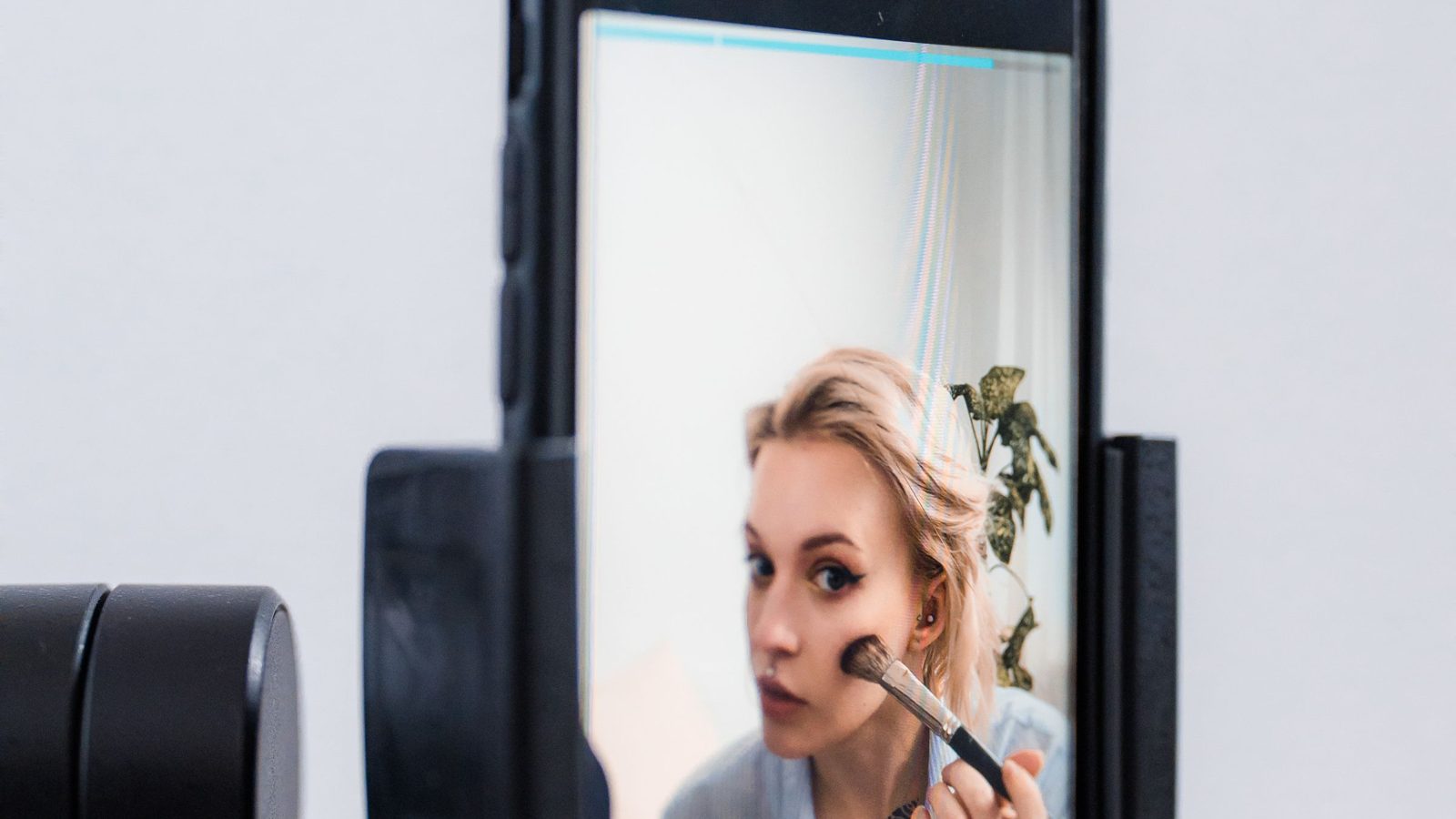
A UGC video works because it looks like a recommendation from an ordinary person, not like a commercial. If a creator gets a ready-made monologue from the brand, they read it off a card, and viewers notice that faster than the product appears in the frame. That is why a UGC video script is not a text to read out. It is a skeleton: the order of scenes, the purpose of each one and a few lines that have to be said.
A UGC script is a skeleton, not a text to read
A good script lays out the order and purpose of the scenes, not every sentence:
- what the viewer should see and hear at a given second,
- what idea each scene has to get across,
- which phrases are mandatory (product name, offer, discount code),
- what must not be said (health claims, comparisons with competitors).
The rest, meaning the words, the tone and the filming location, is left to the creator.
A script is not the same as a brief. The brief says what is being made and on what terms: for whom, by when, for how much and with what rights. The script says in what order to show it. The brief comes first, and the script is built on it. We cover briefs in more detail in How to write a brief for a creator, and the limits a creator has to respect on the content guidelines page.
Who writes the script: the brand or the creator?
In practice there are three models:
| Model | When it fits | Risk |
|---|---|---|
| The brand gives the scene skeleton, the creator writes the words | Most UGC orders for ads and product pages | Lowest: the brand controls the message and the video sounds natural |
| The brand writes the full text | Dialogue formats (e.g. a “podcast-style” conversation), regulated products (supplements, finance) | The video easily turns into a reading exercise |
| The creator writes everything | An experienced creator who knows the product and the audience | The message may drift away from the campaign goal |
Good practice: the creator sends their version of the script before filming, and the brand approves it in one round of comments. Editing a text takes a few minutes; reshooting takes a whole day.
The structure of a UGC video in five scenes
Most effective UGC ads share the same skeleton. In its guidance for advertisers (September 2024), TikTok describes it in three parts: hook, body, close. For UGC it is more convenient to split the body into three scenes:
- Hook stops the thumb. A question, a surprising image, a strong line.
- Problem is a situation in which viewers recognise themselves.
- Product in use shows rather than tells: hands, texture, an app screen, the inside of a venue.
- Proof is the result, a before-and-after comparison, a specific detail, a reaction.
- Call to action asks for one thing: “code in the description”, “link below the video”, “book a table”.
How many seconds per scene
| Scene | 15 s video | 30 s video | 45 s video |
|---|---|---|---|
| Hook | 0–2 s | 0–3 s | 0–3 s |
| Problem | 2–4 s | 3–8 s | 3–10 s |
| Product in use | 4–10 s | 8–20 s | 10–30 s |
| Proof | 10–13 s | 20–26 s | 30–40 s |
| Call to action | 13–15 s | 26–30 s | 40–45 s |
In a 15-second video the problem and the proof often merge into one shot, and that is fine. The only scenes you never shorten are the hook and the call to action.
Hook: 7 ways to use the first three seconds
According to the same TikTok guidance, 90% of ad recall impact is captured within the first six seconds. In practice, whether the viewer stays at all is decided in the first two or three. That is why the hook deserves the most detailed description of all the scenes: it is the one scene the creator should not improvise.
Seven types of hook that work in UGC:
- A question to the viewer: “Does your skin get dry after winter too?”
- A promised benefit: “I’ll show you how to sort out the kids’ breakfast in five minutes.”
- Stating the topic upfront: “I’ve been testing this cream for three weeks. Here’s what happened.”
- Controversy or contradiction: “Stop buying expensive serums until you see this.”
- Result first: you see the outcome first (clean shoes, a finished dish, a full room), then how it was achieved.
- Reaction: the creator’s face the moment they try the product for the first time.
- A scene from life: the phone rings mid-cooking, coffee spills on the desk, and only then does the product come in.
The rule for every type: in the first second something in the frame moves or a face is visible, and on-screen text repeats the point of the hook for people watching with the sound off.
One video, several hooks
A video for paid ads rarely has just one version. Brands usually order one recording with 2–3 alternative openings. The body is shared; only the hook changes. All variants run in the ads manager, and after a few days you keep the one people watch the longest.
In the script it looks like this:
- Hook A: a question (“Do you also…?”)
- Hook B: result first
- Hook C: controversy
- Scenes 2–5: shared by all versions
Each extra hook is a separate recording and a separate line in the quote. Agree on it upfront rather than adding it after delivery. We write more about how creators price variants in How much does a UGC creator earn in Poland.
Technical details to put in the script
These things seem obvious, but if they are not written down they come back as revisions:
- Vertical 9:16 format. In a TikTok study (December 2021), ads shot in 9:16 saw a 91% lift in conversion compared with videos framed by black bars.
- Safe zones. For Reels, Meta recommends (ad specifications, as of September 2026) keeping about 14% of the frame at the top, 35% at the bottom and 6% on each side free of text, logos and key elements, because the profile name, buttons and caption cover them. In the script it is enough to add: “captions and product in the middle of the frame”.
- Captions. On-screen text at the hook and at the offer, so the video also works without sound.
- Length. In the same TikTok study, ads lasting 21–34 seconds converted better than shorter and longer ones. It is a starting point, not a rule: 15 seconds is enough for a simple product, 45 for a service that needs explaining.
- Sound. Voice recorded without background music. The brand adds music when editing the ad, because rights to songs in advertising are a separate matter.
- Raw files and B-roll. If the brand wants to edit variants itself, the script lists extra shots (product close-ups, details, hands) and delivery of unedited files.
A script template to copy
PRODUCT: [name, one feature we want to show]
GOAL: [paid ad / product page / brand profile]
LENGTH: [15 / 30 / 45 s]   FORMAT: 9:16, captions, no music
AUDIENCE: [who is watching and what problem they have, in one sentence]

SCENE 1 — HOOK (0–3 s)
  Variant A: [...]
  Variant B: [...]
  On screen: [hook text]

SCENE 2 — PROBLEM (…–… s)
  What we see: [...]
  Idea to get across: [...]

SCENE 3 — PRODUCT IN USE (…–… s)
  What we see: [shots, close-ups]
  Must be said: [product name, 1–2 facts]

SCENE 4 — PROOF (…–… s)
  What we see: [result, comparison, reaction]

SCENE 5 — CALL TO ACTION (…–… s)
  Says: [one action]
  On screen: [code / link / offer]

WE DON'T SAY: [claims, comparisons, banned words]
DISCLOSURE: [how to mark the collaboration if the video goes on the creator's profile]
DELIVERABLES: [number of versions, raw files yes/no, deadline]
Example: a 30-second video for a cosmetics shop
Product: a niacinamide serum, an online shop with natural cosmetics.
Goal: an ad on Instagram and Facebook.
Audience: women aged 25–40 with enlarged pores and a shiny T-zone.
- Scene 1 (0–3 s), hook A: close-up of the nose in a hand mirror. Creator: “Pores you can see from a mile away? I have one product for that.” On screen: Pores you can see from a mile away?
- Scene 1, hook B: the creator holds the bottle up to the camera: “Three weeks with this serum, and here’s my honest review.”
- Scene 2 (3–8 s): morning, bathroom, a foundation that “shines” after two hours. Idea: I tried mattifying powders and they didn’t last.
- Scene 3 (8–20 s): two drops on the hand (texture close-up), applying it to the face. The serum’s name must be said, and that it contains niacinamide. The word “cures” is off limits.
- Scene 4 (20–26 s): the same mirror three weeks later, the same light. The creator says in her own words what she has noticed.
- Scene 5 (26–30 s): “Code MARTA10 gives you 10% off in the shop, the link is below the video.” On screen: the code and the shop name.
We don’t say: “removes pores”, “works in a week”, comparisons with other brands.
Deliverables: 2 versions (hook A and B), raw files of scene 3, deadline 7 days after receiving the product.

The most common mistakes in UGC scripts
- Logo and brand name in the first second. The viewer recognises an ad and scrolls away before hearing why they should stay.
- A monologue instead of scenes. Half a page of text to learn by heart produces a video that looks read out.
- Five benefits in 30 seconds. One video, one idea. The product’s other features are material for the next videos.
- No proof. The creator’s enthusiasm alone does not convince; you need a result, a detail or a comparison.
- Two calls to action at once. “Follow, visit the website and leave a comment” means nobody does anything.
- Versions and files not agreed. The brand expects three hooks and raw footage, while the creator priced one finished video.
Ad disclosure and rights to the material
A script must not hide the fact that the video is an ad. If the material goes on the creator’s profile, the collaboration has to be marked in line with the recommendations of the President of UOKiK (September 2022), the Polish consumer protection authority, and when in doubt the creator marks the material as advertising. The simplest way is to write the disclosure straight into the script: what it says and where it appears. More on the ad disclosure page.
If the video is going to run as paid ads from the brand’s account, the scope of use is agreed before filming: where, for how long, and whether the brand may cut and rework the material. We describe this on the usage rights and whitelisting pages. The difference between a video the brand buys as a file and a post on the creator’s profile is explained in UGC vs influencer marketing. If the video will also run in Reels, see How to increase Instagram Reels reach.
How it works on Blogger Bank
On Blogger Bank a brand posts a task: product, format, number of versions, deadline and budget. The scene skeleton from the template above can be pasted straight into the description. UGC creators apply on their own, and the brand picks the person whose previous videos match the product’s style. The script and revisions are agreed in the chat attached to the task, so every arrangement stays in one place.
Payment is secured: the creator gets paid after the material is approved. The commission is 5% on the brand’s side and 5% on the creator’s side. Create an account and post your first task with a ready script, or see how Blogger Bank works for brands.
Frequently asked questions
How long should a UGC ad video be?
Usually 15–45 seconds. A TikTok study from December 2021 found that ads lasting 21–34 seconds converted best. A simple product fits into 15 seconds, while a service that needs explaining is better shown in 30–45.
How many hooks should you order for one UGC video?
For paid ads, usually 2–3. The body is filmed once and only the opening changes. After a few days of running the ads, you can see which variant people watch the longest. Each extra hook is a separate line in the quote.
Does the creator have to follow the script word for word?
No, and usually they shouldn't. Only the mandatory elements must be said exactly: the product name, the offer, the code and the ad disclosure. The creator says the rest in their own words, which is why the video sounds like a recommendation, not a commercial.
Who should write a UGC video script?
A split works best: the brand lays out the scenes and what must be said, and the creator writes the words and sends them for approval before filming. A full brand-written text makes sense for dialogue and in industries where every phrase has legal weight.
How is a script different from a brief?
A brief describes the goal, audience, deadline, budget and rights, meaning what is being made and on what terms. A script lays out the order in which to show it: scene by scene, with seconds. The brief comes first, then the script.
Does a UGC video need captions?
Yes, at least at the hook and at the offer. Some people watch videos with the sound off, and on-screen text gets the message across anyway. Captions go in the middle of the frame, outside the areas covered by the app interface.
Can one script work for both TikTok and Instagram Reels?
Usually yes: both formats are vertical 9:16, and the hook, body and close structure works on both. The hook and the call to action may differ, so it is worth ordering a separate opening variant for each platform.
Should the script be approved before filming?
It is worth it. Comments on a text take a few minutes, while a reshoot costs the creator a day and pushes back the deadline. One round of comments on the script usually replaces two rounds of edits on the finished video.