Always-on micro-influencer campaign: how to scale the program month after month
Short answer
You scale an always-on micro-influencer campaign when every month runs through the same cycle: a stable creator pool with rotation and reserve, a quarterly calendar, a brief template with a changing theme, a budget with fixed and test parts, and one results table. Review creators every quarter, and source new ones through a recurring task on Blogger Bank.
You scale an always-on campaign with micro-influencers once you stop treating every month as a separate campaign. Instead of searching for creators, writing a brief and negotiating terms from scratch, you build a repeatable cycle: a stable creator pool with a reserve, a monthly content calendar, a brief template with a swappable theme, a budget split into a fixed part and a test part, and one results table tracked month after month. Creators are reviewed every quarter to decide who stays and who is replaced. One way to keep sourcing creators without the manual work is a recurring task on Blogger Bank that creators apply to themselves.
This guide covers a program with many micro creators and a continuous flow of content. If you are planning a long relationship with a few people who will become the face of the brand, read the guide to creator ambassador programs.
What the monthly always-on cycle looks like
The program works when every month goes through the same stages in the same order. A sample rhythm:
- Week one of the previous month — pick next month's theme and products, update the brief template.
- Week two — confirm which pool creators are in, fill gaps from the reserve, ship products.
- Week three — creators send concepts or scripts, and you approve them in one batch.
- Publication month — content goes live according to the calendar, spread evenly rather than all on one day.
- First days of the following month — collect stats, settle collaborations, pick content to reuse.
The key point is that cycles overlap: while one month is being published, the next is already in preparation. That is why it pays to set deadlines once for the whole quarter and share them with creators at the very first collaboration.
The creator pool: core, rotation and reserve
In an always-on program you are not choosing creators for one campaign, you are building a pool that survives dropouts and dips in form. A three-group split works well:
- Core — creators who publish every month. Their audiences see the brand regularly, and you already know their quality and reliability.
- Rotation — creators who appear every other month or for selected themes. They keep content from becoming monotonous and bring the brand to new audiences.
- Reserve and tests — new people tried out in a single collaboration. The best move up to rotation or core, and the reserve replaces anyone who drops out in a given month.
When choosing new creators, look at topical fit, the quality of comments and how the creator talks about products, not just follower count. You can browse profiles in the influencer catalog, including by category, for example health, technology, automotive, travel or family creators.
A practical rule: your reserve should always be larger than the usual number of monthly dropouts. If a few people drop out every month and there is no reserve, each cycle ends with a frantic search in the last week.
A content calendar for the whole quarter
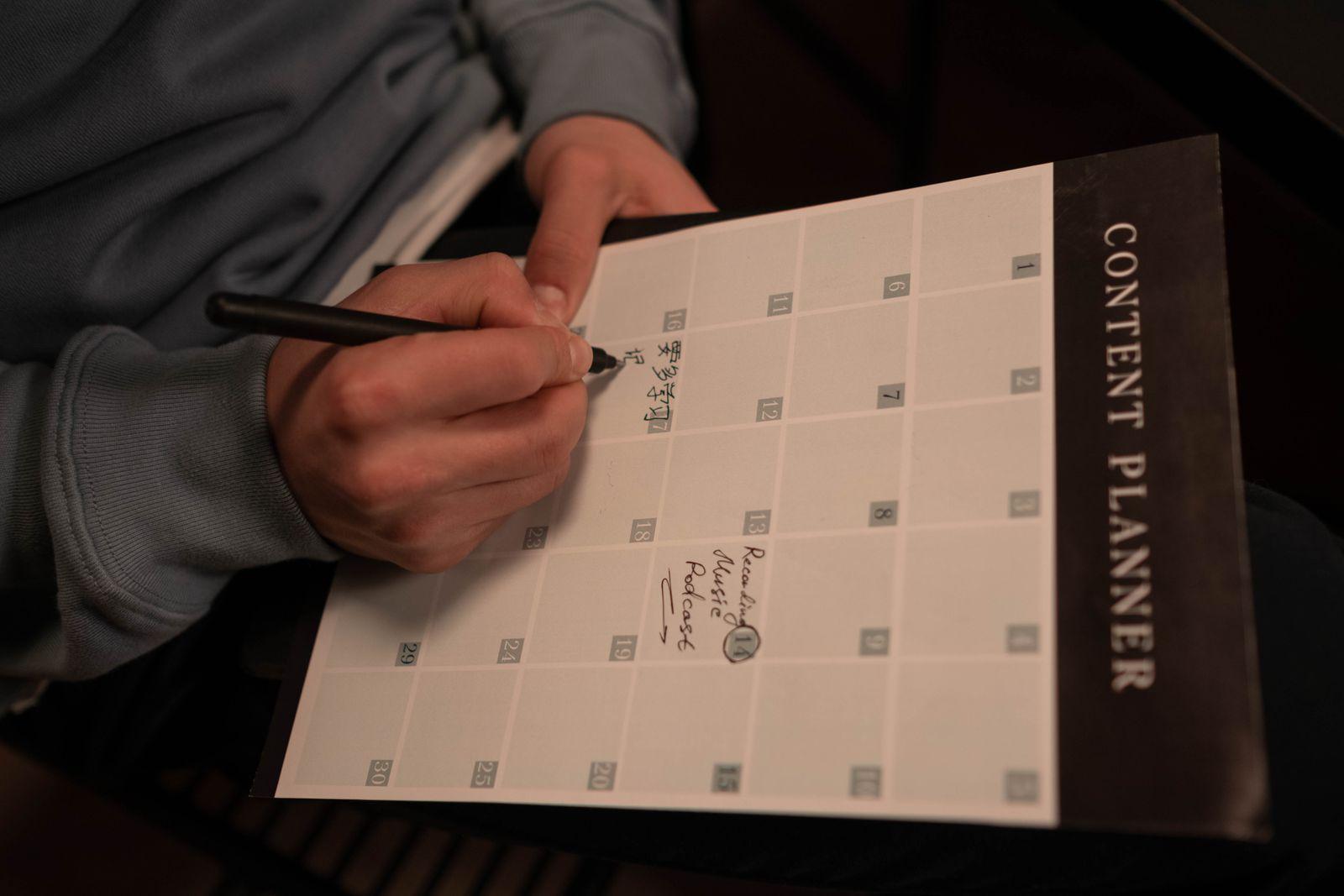
The calendar is a single table where each row is one planned post. A minimum set of columns:
- month and theme;
- creator and their group (core, rotation, test);
- format and platform;
- product or message;
- concept deadline, content deadline, planned publication date;
- status and link to the post;
- reuse permission and its scope.
Plan themes a quarter ahead and tie them to the sales season: launches, holidays, sale periods. Spread posts evenly across the month so the brand is present all the time, not just in one week. For more on running such a register, see the guide to managing many creator collaborations at once.
The brief as a template
With dozens of collaborations a month, writing a brief from scratch is not an option. Split it into a fixed part and a variable part.
Fixed part (rarely changes):
- brand description and tone of voice;
- rules for disclosing paid partnerships;
- what not to say or show;
- technical requirements for formats;
- approval rules and number of revision rounds;
- content reuse rules.
Variable part (every month):
- theme and product;
- one key message;
- sample ideas the creator may, but does not have to, use;
- deadlines for the month;
- a link, code or other way to track results.
Micro creators work best when they have freedom of form. The brief defines what needs to come across, not a word-for-word script. That keeps content natural, and audiences do not see the same text from a dozen people.
A monthly budget without surprises
Plan the always-on budget monthly and approve it quarterly. Split it into parts:
- Fixed part for the core — predictable every month because terms with core creators are already agreed.
- Rotation and tests — where you try new creators and new formats.
- Products and shipping — often overlooked, but noticeable with many creators.
- Boosting the best content — if you use creator content in paid ads.
- Reserve — for replacements and unplanned opportunities.
Agree terms with core creators for a longer period, such as a quarter, with an option to review. You save time on monthly negotiations, and the creator gains predictability. Contracts and payouts for many people are covered in the guide to paying influencers.
Reusing creator content
A steady flow of content from micro creators is also a content library for the brand. To be able to use it:
- put the scope of use (website, brand social media, paid ads), period and territory in the contract before production, not after publication;
- ask for a high-quality file without platform captions if you plan to edit it;
- mark in the calendar which content has reuse permission and until when;
- every month pick a few of the best pieces and pass them to the ads, website or store team.
For licensing and copyright details, have a lawyer review the contract.
Communicating with the creator pool
With dozens of people, individual arrangements with each one quickly drift apart. Three elements help standardize communication:
- Starter pack — one document for every new creator: program rules, the fixed part of the brief, the quarter's cycle deadlines, and how approval and payment work. You send it once, at the first collaboration.
- Monthly announcement — one message to the whole pool with next month's theme, the variable part of the brief and the deadlines. Creators confirm by a set day, and no reply means someone from the reserve steps in.
- Feedback — after each cycle, briefly tell creators what worked best. Micro creators are happy to return to programs where they know what the brand expects.
Also assign one person on the brand or agency side to answer creators' questions. When questions go to several people, answers tend to contradict each other and deadlines slip.
How to measure the program over time
A single post tells you little; the trend is what matters. Keep one results table where each row is a post and the columns stay the same every month: reach, views, engagement, clicks, code uses or sales if you track them, and cost.
Every month compare:
- the whole program against previous months;
- each creator against their own average;
- the groups: core, rotation, tests;
- themes and formats.
Every quarter look wider: is branded search traffic growing, are sales growing in the channels you support, are mentions increasing. Metrics and attribution are covered in detail in the article on measuring creator campaign results.
When to keep and when to replace a creator
Make decisions at the end of the quarter, based on several posts, not one weaker one. Useful criteria:
- Keep when the creator consistently hits their usual level, meets deadlines, and comments show real interest in the product.
- Move to rotation when results drop because the audience sees the brand too often. A break usually helps.
- Give one more chance with a new theme when quality is good but the theme did not suit their audience.
- End the collaboration when delays repeat, content needs many revisions, or the creator does not follow ad disclosure rules.
Thank the creators you part ways with and leave the door open. In a continuous program, a good reputation among creators makes recruiting new ones easier.
Scaling checklist
- Your pool is split into core, rotation and reserve.
- Cycle deadlines are set for the whole quarter.
- The content calendar has a reuse-permission column.
- The brief has a fixed and a variable part.
- The budget has separate parts for tests and reserve.
- The results table has the same columns every month.
- Creators are reviewed every quarter against written criteria.
How Blogger Bank solves the problem of sourcing creators every month
Most of the time in an always-on program goes into refilling the pool and handling paperwork for each new person. On Blogger Bank it works differently:
- Instead of searching for creators from scratch every month — you publish a task describing what needs to be done, and creators apply to it themselves. Your reserve refills without sending messages.
- Instead of copying terms into every contract — you describe the terms in the task once, and the contract with the chosen creator opens automatically.
- Instead of emails, messengers and a status spreadsheet — conversation, content approval and payment are in one place, so the next month of the program is another task on the same terms, not a new project.
You can also pick core and rotation creators in the influencer catalog and invite specific people. Create a brand account and publish your first task.
Frequently asked questions
What is an always-on campaign with micro-influencers?
It is a program where a brand works with a group of micro creators continuously, month after month, instead of running one-off campaigns. Content appears regularly according to a calendar, and creators work from a shared brief template and a repeatable cycle.
How do you organize the creator pool in an always-on program?
Split it into three groups: a core that publishes monthly, a rotation that appears for selected themes, and a reserve with tests. The best testers move up, and the reserve replaces anyone who drops out in a given month.
How often should you post in an always-on campaign?
Set the rhythm for a quarter and spread posts evenly across each month so the brand is present all the time. Core creators publish monthly, rotation less often, and concept and content deadlines stay fixed for every cycle.
How do you brief many micro-influencers every month?
Split the brief into a fixed part covering brand, tone, ad disclosure and approval rules, and a variable part with the month's theme, key message, sample ideas and deadlines. Give creators freedom of form so content sounds natural.
How do you plan an always-on campaign budget?
Plan it monthly and approve it quarterly. Set aside a fixed part for the core, a part for rotation and tests, product and shipping costs, boosting the best content, and a reserve for replacements and unplanned opportunities.
How do you measure an always-on program over time?
Keep one table with the same columns every month and compare trends: the whole program against previous months, each creator against their own average, groups, themes and formats. Every quarter also check branded search and sales.
When should you replace a creator in an always-on program?
Decide at the end of the quarter based on several posts. End the collaboration after repeated delays, many revisions or broken disclosure rules. If results fall because the audience is tired of the brand, move the creator to rotation.
How do you reuse content from micro creators?
Put scope of use, period and territory in the contract before production. Ask for high-quality files, mark content with reuse permission in the calendar, and pass the best pieces to the ads, website or store team every month.