Shoe Store Advertising: Show the Try-On
Short answer
Shoe store advertising can help customers prepare for a try-on by showing a specific model, how to put it on and the right manufacturer's chart. The creator's size and impressions do not replace individual selection. Prepare a try-on record, check availability and post a brief on Blogger Bank. Separate video acceptance from evaluating subsequent enquiries and purchases.
Shoe store advertising should show what customers cannot learn from a photo of a pair against a white background: how to put the shoe on, where to find the right size chart and what to ask before trying it on. A creator can walk through that process on camera, speaking their audience's language. Their size is not a buying guide for everyone, though, and an initial impression of comfort does not replace trying the shoes on yourself.
If you have good product photos but lack this kind of demonstration, create a brand account on Blogger Bank and describe your try-on brief. Prepare the model, a buyer's question and the scenes you need. Interested creators will apply for the assignment; the store will choose a creator and check the information about the pair. The platform helps organise the collaboration, not choose shoes for the customer.
Choose the situation your customer needs shoes for
Start with a question at the shelf: “I'm looking for shoes for everyday trips between home, the bus stop and the office.” That is a more specific assignment than presenting an entire new collection. You can show a lace-up model with an everyday outfit and demonstrate putting it on. Do not add sporting uses, rain resistance or health benefits that the documentation does not support.
Someone who wants to see the fastening needs a different scene from a buyer wondering about the height of the upper. Choose a concern that images can honestly address. If the answer requires information from the manufacturer, prepare it before filming. The creator should not guess the lining's composition or the sole's intended use by touch.
A banner announcing a new arrival may draw attention to the design, but it does not show how to get your foot into the shoe. A creator contributes that demonstration and a user's questions, not another version of a poster. Advertising will not fix missing sizes or an incorrect chart on the website, however. Remove those obstacles first so the curiosity sparked by the video has somewhere to lead.
Everyday footwear does not call for a review of equipment for multiple sports. The guide to sports store advertising covers that broader scope. Here, the assignment centres on a specific pair and the decision to try it on, not a comparison of the entire range.
Plan the model demonstration and try-on
Start the video with an identifiable model, not just an outfit. Put the name and variant in the caption, and show the side, fastening and opening of the shoe on screen. The creator then puts the pair on and performs ordinary activities consistent with its intended use. The shot should let viewers see the shoes rather than hide them under wide trouser legs.
Agree on the size with the creator before shipping. If the delivered pair does not fit, change the filming arrangements, not the creator's commentary. A video of an ill-fitting pair does not become reliable by cutting out the moment it is put on. You can pause production, clarify sizing with the store or limit the material to a demonstration of details without pretending the try-on went well.
Prepare a try-on record: a short document for the brief and the review of the finished material. This is an editorial suggestion, not a feature built into Blogger Bank. Each field should make it easier to check a specific statement or shot later:
- Model and sizing source: the exact name, variant, size marking on the pair and a link to the relevant manufacturer's chart. Note whether the chart gives foot length or another measurement.
- Conditions of use: where the demonstration takes place, what the creator wears with the shoes and whether they are filming a first try-on or a later account of wearing them.
- Observation: what is actually visible and what this person feels. Separate the visible fastening method from personal comments on fit.
- Limitation: what the demonstration does not test. A short scene in a store does not confirm all-day comfort or the durability of the material.
- Availability: where the customer can find the variant shown and who at the store will check that the link is current before publication.
Training example, not a Blogger Bank campaign: a store commissions a demonstration of a lace-up pair for everyday walking. The creator shows herself undoing the laces, putting the shoes on and walking across the shop floor with the footwear in view. She says this is her first try-on. In the record, she notes the variant and the chart she used instead of encouraging viewers to buy the same size.
The person reviewing the video compares it with the record: is it the same pair, has the caption changed “first try-on” into “tested on long walks”, and does the link lead to the right product? If the fastening shot is missing, they request that specific footage. They do not demand a more enthusiastic opinion as a condition of accepting the work.
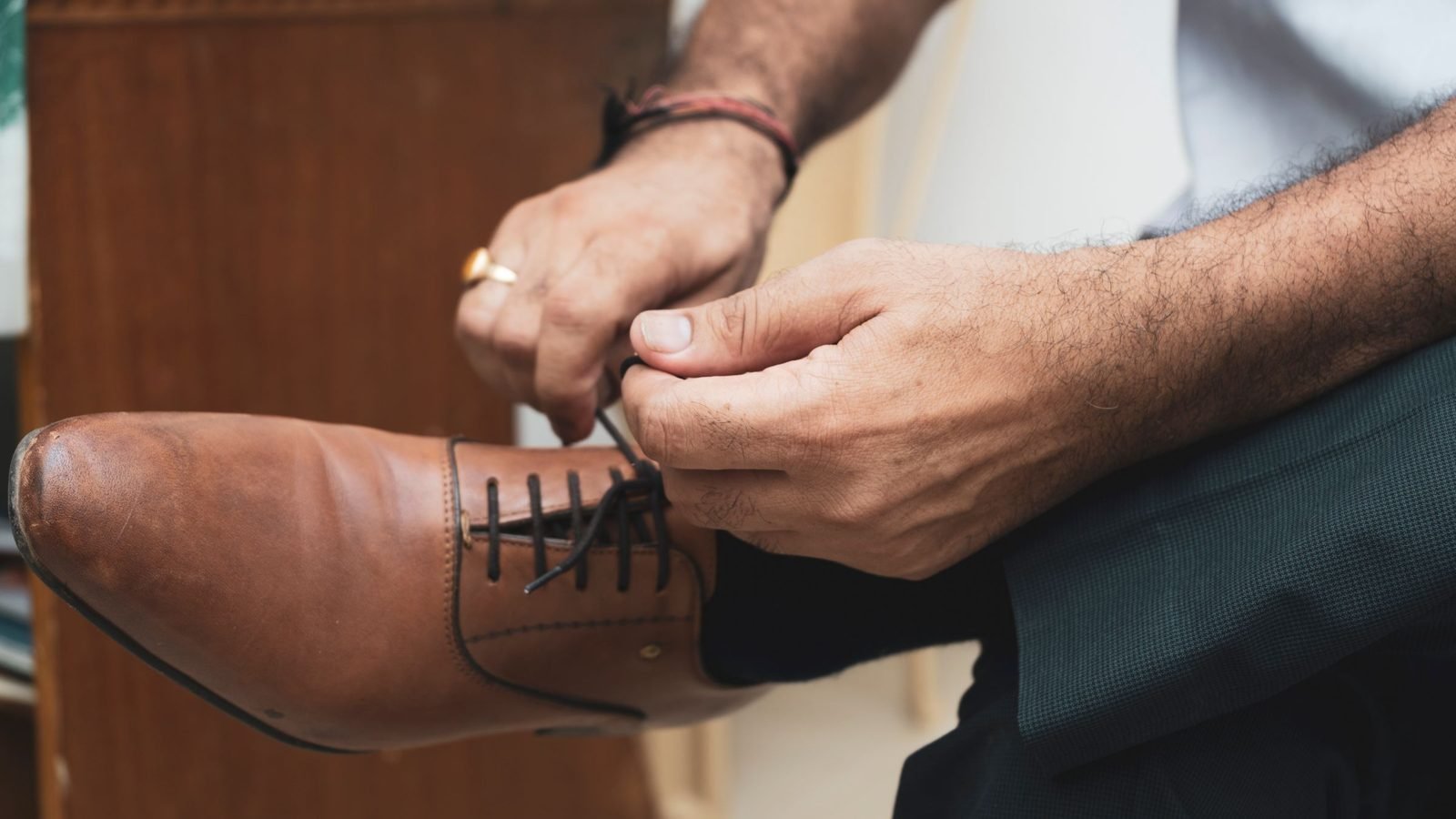
The photos are illustrative and accompany the training example; they do not depict a campaign or products from the store described.
Connect the video to the specific manufacturer's chart
A size number without context gives viewers too little information. Show where the brand's chart appears on the product page and which footwear category it applies to. Do not borrow another manufacturer's chart just because it uses the same size labels. If you sell several brands, provide the relevant information for each.
The ECCO size guide, checked on 21 November 2026, directs buyers to measure both feet and compare the results with the manufacturer's chart. It is an example of a source for that brand's footwear, not a universal chart for the store. In your video, point to the instructions for the model shown rather than inventing your own conversion.
Also prepare a response for customers who still do not know what to choose. Instead of saying “get the same size as me”, the creator can direct them to customer service with the model name and a question about the chart. Do not ask viewers to post photos of their feet or health information in the comments. This material should support a conversation about the range, not provide a remote assessment of fit.
Check the whole journey on a phone: the link in the post, the page for the correct pair, variant selection and opening the chart. If the chart is hidden or illegible, the video alone will not make up for it. Do not squeeze the entire chart into tiny print in a moving shot; a clear indication of where customers can find current information matters more.
Separate personal opinion from a promise of comfort
“During this try-on, I found the strap easy to fasten” describes the creator's experience. “These shoes are comfortable for everyone” promises an outcome the recording does not demonstrate. Commission an observation in the brief, not a positive verdict. Comfort depends on the person and the fit; you cannot pass it on to a viewer along with a product code.
Do not turn a description of everyday walking into a claim about treating pain, correcting posture or preventing injuries. Visible features and genuine impressions are enough for this advertisement. When a viewer asks about a health problem, the store should not respond with a promise based on a creator's reel. Assign someone who can distinguish an ordinary product question from an issue beyond the scope of this demonstration.
Maintain that boundary in editing too. Do not add an “all day” caption to a comment about trying shoes on in the store. If you plan a later follow-up, define its scope separately and ask for the actual conditions of use. The article on building a fashion brand community with creators explores an ongoing conversation around audience questions; you do not need a whole series to show one pair honestly, though.
An advertisement on a creator's profile should remain recognisable as advertising. UOKiK's influencer marketing recommendations call for clear identification of the material's commercial nature and the promoted brand. Check that disclosure alongside the captions and link. A natural speaking style does not justify presenting a commissioned try-on as a chance purchase.
Check the variants and direct customers to an available pair
Before publication, confirm not only that the model is in the range but also where customers can try it on. Availability for delivery and availability in a physical store are different pieces of information. If the creator invites viewers to a shop, the store should check what they can actually see there and provide the current address and opening hours.
If the featured size sells out, do not switch the link to a similar shoe without explaining. Update the description or the agreed message, and pause further promotion if the main invitation is no longer valid. An alternative may have a different fastening or construction; observations from the video do not automatically apply to the new pair. Assign responsibility for such changes before launch.
Content intended for the store's own channels can also be planned for its local business profile. Google's help page on Business Profile posts describes updates with a photo or video and a button leading to a website. This is not a promise of better rankings or sales. Use this placement only when you have agreed on the use of the material and have an up-to-date landing page.
How to organise a creator collaboration through Blogger Bank
Post an assignment on Blogger Bank with the try-on record, scene descriptions and filming location. Ask applicants for an example of a product demonstration and an idea for addressing the chosen concern. Compare how clearly they demonstrate products and, for posts on their profiles, how well their audiences fit the store. Attractive photography alone does not answer these questions.
Separate publication on the creator's profile from file delivery. The former is intended to reach their audience; the latter gives the store material for agreed channels but does not provide an audience. Before production, specify where and for how long the content can be used, whether it can be shortened, paid distribution and the scope of permission to use the creator's likeness and music. Receiving a file does not automatically grant permission for every placement.
Blogger Bank lets you collect applications and handle arrangements, contracts and secure payment within the collaboration. The store remains responsible for product information, availability and reviewing the result. Accepting a properly made video does not confirm sales effectiveness. At review, check the try-on record, advertising disclosure, complete file delivery and a working link.
After publication, record model enquiries, visits to the product offer and purchases separately. In a physical store, you can ask customers if they would like to share how they heard about the pair, but do not treat those answers as a complete measure of visits. A tagged link helps identify some traffic; it does not prove that every order resulted solely from the creator.
Repeated questions about the chart suggest the information needs improving, while visits to an unavailable variant call for checking the offer. Record simultaneous promotions and range changes before evaluating the creator. Start with an assignment to demonstrate one available pair: attach its try-on record, check the path to the product and only then agree on the filming date.
Frequently asked questions
How can a creator help advertise a shoe store?
Choose a specific pair and a buyer's question. Commission a demonstration of putting the shoes on, details and a try-on with honest commentary. Prepare the right manufacturer's chart and check the path to the product before agreeing on publication.
Is the creator's size enough for a recommendation?
No, the creator's size describes only their choice in the featured model. Customers should use the relevant manufacturer's instructions and chart. The video can point to that information, but it does not replace individual selection or trying shoes on yourself.
What should you show besides the outfit?
Show how to put the shoes on, the fastening, a side view and an ordinary activity consistent with their intended use. Choose shots around the customer's question. Do not claim material properties or uses the store cannot substantiate.
Can you promise comfort to every customer?
No, a creator's personal impression does not confirm comfort for every buyer. The creator should identify the model and observation conditions and state whether this is a first try-on. Do not turn a short scene into an assurance of all-day comfort.
How do you avoid turning an opinion into a medical claim?
Limit the commentary to visible features and the creator's actual experience. Do not add promises of treating pain, correcting posture or preventing injuries. An advertisement showing an ordinary try-on provides no basis for giving viewers health advice.
What should you do if the advertised size sells out?
Check whether the invitation is still valid and agree on changes to the description, link or material. Do not swap pairs without explaining differences. If the main information is no longer true, pause further promotion until the availability message is corrected.
How can you measure interest in trying shoes on?
Record model enquiries, visits to the offer and purchases separately. Voluntary customer responses in the store can add context but do not measure every visit. Account for missing sizes, other promotions and the limitations of attributing sales.
How should you describe an assignment on Blogger Bank?
Specify the model, variant, manufacturer's chart, filming location and required scenes. Attach a try-on record and acceptance criteria. Separate publication on the creator's profile from file delivery, and define the agreed scope for subsequent use of the material.