Catering company advertising: show an order in practice
Short answer
Catering company advertising with a creator should show a specific delivery option, serving arrangements and service scope. The company confirms menu and allergen information, while the creator explains what to ask before ordering. You can commission the content through Blogger Bank. The caterer handles customer enquiries, date availability and order acceptance through its own channels.
Catering company advertising should show what will arrive at the specified address and what the customer will have to do themselves. An appetising table alone does not explain whether the order includes setting out tableware, staff on site and equipment collection. A creator can walk through a sample order from the organiser's perspective: watch the delivery, ask about the scope of service and show how to agree the details.
If you have an offer you can demonstrate this way, create a brand account on Blogger Bank and prepare a catering demonstration brief. You describe the task, and interested creators apply themselves. The platform helps keep the collaboration, agreements, contracts and secure payment in one place; it does not take food orders on your behalf.
Choose the occasion and scope of the order
First decide whether the video covers refreshments delivered to an office, a family gathering at home or an event with staff on site. Each situation needs a different explanation. Do not combine them into a single promise to “organise everything” if your company agrees a separate scope each time. Viewers should recognise a situation similar to their own and then know what to ask.
A photograph of platters helps people assess how the food looks. A leaflet can provide contact details. Neither, on its own, explains what happens between the driver's arrival and the start of the gathering. This is where working with a creator has a specific purpose: showing the handover and division of responsibilities. If unclear terms or delays are the problem, sort out the service first. A video cannot replace reliable delivery.
Prepare a short overview of the chosen offer: delivery area, event type, serving arrangements, equipment and the team's tasks. Mark anything agreed individually. Do not present decorations borrowed just for filming as though they come with every order. The creator should receive this overview before planning the scenes, not only when you review the finished video.
This is different from inviting people to a venue. If you want to show a regular visit for a meal, use our guide to restaurant marketing with creators. With catering, the service takes place in the customer's space, and the advertisement should lead to a specific enquiry about delivery or staffing.
Show the delivery and service components
Commission scenes that address the organiser's different concerns. At the handover, show how the customer receives the order. When setting out the food, explain who prepares the space and tableware. At the finished table, identify the elements included in the chosen option. If your company collects equipment after the gathering, include that step too, or clearly describe how to arrange it.
The creator does not need to pretend to be a customer who has just hosted a party. They can lead the demonstration and ask a staff member: “What stays here?”, “What does the organiser prepare?”, “Does anyone from the team stay during the event?”. The answers should refer to the offer being shown. If staffing is a separate option, say so when showing it rather than hiding this in the closing description.
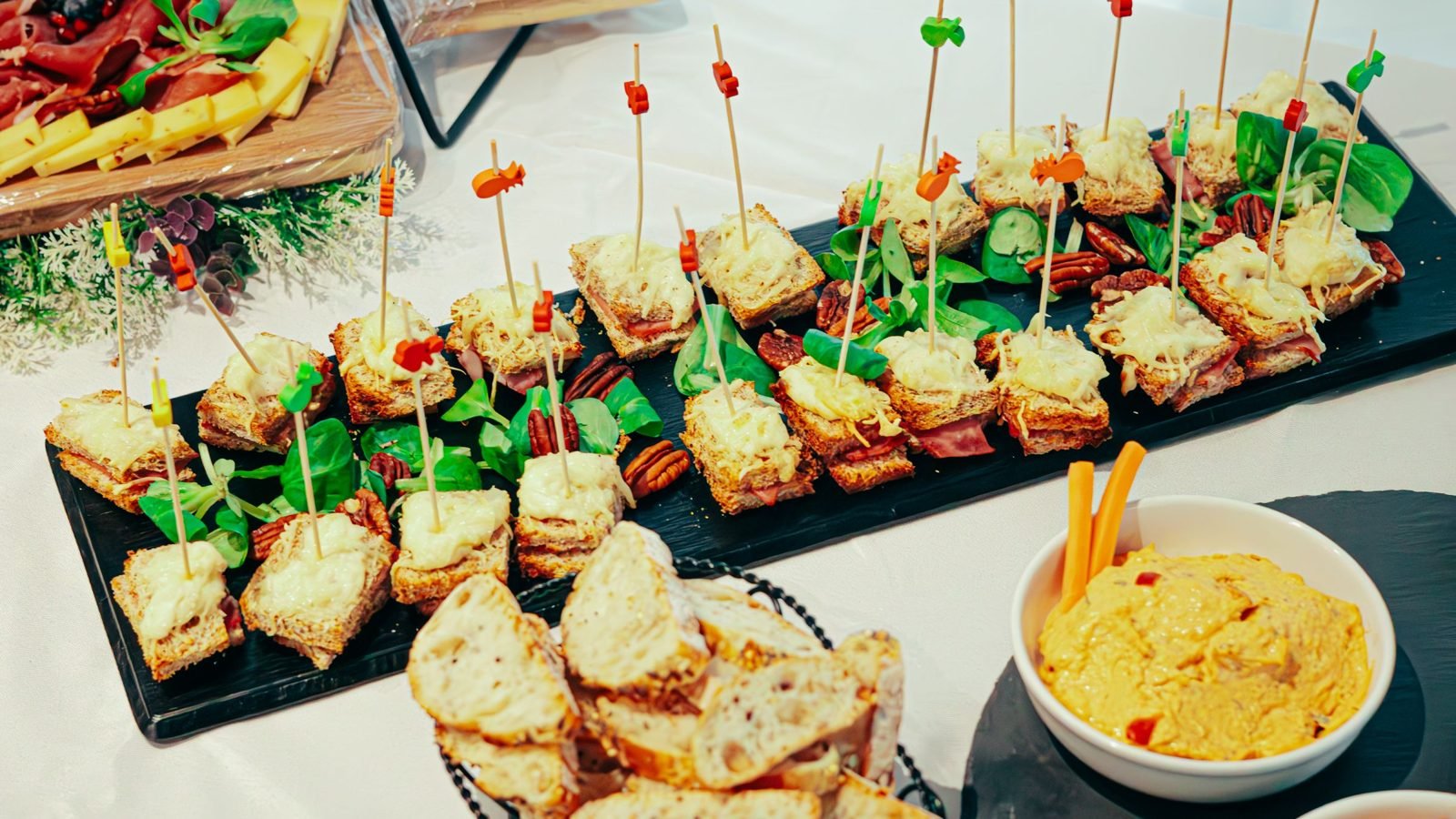
The photographs in this article illustrate a training example; they do not document work carried out through Blogger Bank. Label your brand's own presentation as a demonstration too. Viewers should not mistake a staged scene for coverage of a real order or interpret props as part of the standard service.
Choose a creator to suit the task. For a post on their profile, check available information about their audience's location and previous content aimed at event organisers. When commissioning files only, clear shots, captions and interviewing skills matter more. Attractive food close-ups are useful, but a portfolio should also show complete situations, not just plates.
Prepare menu and allergen information
The catering company provides and confirms ingredient and allergen information using current documentation. The creator cannot establish it by looking at a plate or tasting the food. In the brief, name the person who will approve dish names and statements about the menu. If ingredients change after filming, review the captions, description and the page linked from the post.
Do not turn “vegetable option” into an assurance that a dish is suitable for everyone with an allergy. Do not use footage of sealed containers as proof of safe transport either. The Codex Code of Practice on allergen management, translated by Poland's Chief Sanitary Inspectorate (GIS), describes allergen management throughout the supply chain. This goes beyond the appearance of a finished dish; an advertisement cannot replace procedures or checks.
The practical boundary for the script is this: we show how the order is handed over, not assess food safety. Direct customers' questions about special requirements to the person responsible at the catering company, away from public comments. Do not collect participants' medical histories through the creator. Do not publish an “allergen-free” claim that the company cannot adequately substantiate.
Before filming, mark which information in the offer overview has been approved and which requires a conversation with the customer. The creator can explain where to obtain current information rather than list the ingredients of the entire menu from memory. The Codex source was checked on 22 November 2026; it is used here to set boundaries for advertising claims, not as instructions for organising sanitary inspections.
Commission scenes without real guests' data
Prepare a demonstration before the event or in a separate, agreed location. A staff member, the creator and someone who has agreed to play the organiser are enough to explain the service. Remove participant lists, labels with a private customer's address, order screens and delivery documents from view. Do not use a real form as a prop.
In the training example, a small company orders refreshments for a team meeting in an office room. The camera shows the container handover, the prepared table space and the items included. The presenter explains that this option covers delivery and the agreed setup, without staff staying during the meeting. This is an assumption for the example, not a ready-made package available on Blogger Bank.
Agree with the host of the space where filming is allowed and who can appear. Permission for a supplier to enter an office does not, by itself, constitute consent to publish images of the interior or people. When reviewing the material, also check window reflections and the background of wide shots. A demonstration does not need incidental guests to make sense.
Clearly label the advertising post on the creator's profile and identify the promoted company. Poland's competition and consumer protection authority, UOKiK, recommends adding your own disclosure and using the platform's feature, where available. Check that disclosures are visible on a phone, including alongside captions and app buttons. A natural conversation with a staff member does not change the commercial nature of the collaboration. The recommendations were checked on 22 November 2026.
Connect the content to a complete enquiry
After the video, viewers should reach the current catering offer and a contact who handles these orders. Do not send them to table reservations. If the company also sells events in its own function room, separate these routes. We discuss showcasing a venue in our article on attracting private event customers to a restaurant; here, the task is to agree service arrangements at the customer's address.
You can add the following enquiry template to the offer page. It is an editorial aid for customers, not a form or an automated Blogger Bank feature. The completed description should let the company give a specific response without asking for a guest list.
- Date and location: planned date, meeting time, town or city and type of space; access arrangements to be agreed with the order coordinator.
- Event type: team meeting, approximate number of participants and how the refreshments will be served and enjoyed.
- Scope: delivery, setup, tableware, any staffing and equipment collection; indicate whether each element is needed.
- Menu: the preferred option and a request for current ingredient and allergen information, without sending guests' health data.
- Questions for the company: date availability, feasible scope, what the customer prepares and how the order is confirmed.

In the training example, a customer's response might read: “We are planning a team meeting at the office. We need refreshments delivered and set out, without staff staying during the meeting. Please confirm availability, the tableware included and current menu information.” The customer adds the date and location before sending. This starts a more specific conversation than simply saying “please send an offer”.
You can also use the commissioned files in a Google Business Profile update if the agreed rights cover this. Google Help describes updates with a photo, video and call-to-action button. Point it to the relevant enquiry route, not a general gallery. The feature does not promise higher rankings or sales; the documentation was checked on 22 November 2026.
How to organise a creator collaboration through Blogger Bank
Post a brief on Blogger Bank to demonstrate a chosen catering order. Specify the filming location, available date, offer overview and scenes to produce. State whether you are commissioning a post on the creator's profile, files for the company's channels or both. According to the platform's description for brands, creators apply for briefs, while messages, files and collaboration stages are kept in one place.
Look for proposals that explain the service, not promises of a guaranteed number of customers. Agree on formats, the delivery deadline, revisions and who approves factual information. Specify the channels where files may be used, the duration, editing permissions and any paid advertising. Receiving a video does not automatically mean you can use it everywhere. Do not ask the creator to fake a recommendation from an event they did not organise.
Review the material with the offer overview in hand: is the delivery scope clear, are extras distinguished, is the menu confirmed, are guests' details hidden and is the advertisement labelled? Then follow the route from the video to the form on a phone and check that the submission confirmation does not look like order acceptance. Record the contact, agreed terms and accepted order separately in your own company records.
When assessing the collaboration, combine available content statistics with information about the source of the enquiry and how the conversation progressed. Do not attribute all new customers to the creator if other activities are running at the same time. Blogger Bank organises the creator collaboration; delivery availability, customer replies and catering fulfilment remain the company's responsibility.
Start by commissioning a demonstration of one service scope. Attach the offer overview and enquiry template, and before publication check whether customers can use them to describe their own gathering.
Frequently asked questions
How can you advertise a catering company with a creator?
Commission a demonstration of a specific service option: delivery, food setup and agreed staffing. The creator should explain the scope and direct viewers to the current offer. The company confirms facts, availability and order terms rather than promising to cater for every event.
Is a photograph of the finished table enough?
A photograph of the finished table shows how the refreshments look but does not explain responsibilities. Add delivery, tableware, setup and equipment collection details. Clearly distinguish the chosen option's components from decorations and services agreed separately.
What information should a customer's enquiry include?
A catering enquiry should include the date, location, event type, approximate number of participants and required service scope. Customers can request current menu and allergen information. You do not need a list of guests' names at the outset.
Who confirms allergen information?
The catering company confirms allergen information using current documentation, not the creator judging food by appearance or taste. Before publication, appoint someone to approve the menu and captions. An ingredient change requires the messaging to be checked again.
Does a video prove that food transport is safe?
An advertising video does not prove food transport safety or replace company procedures and checks. It can show the order handover. Do not present container footage as confirmation of zero risk or dishes being suitable for everyone.
How can you film a demonstration without revealing guests?
Prepare a demonstration in an agreed space with people who consented to appear. Remove participant lists, customer addresses and order documents. Check backgrounds and window reflections; explaining the service does not require coverage of a private event.
How do you distinguish an enquiry from a booking?
Submitting a form starts a conversation; it does not confirm catering fulfilment. The company should record contact, agreed terms and order acceptance separately. The enquiry submission message must reflect the actual stage without implying that the date is reserved.
How do you prepare a brief on Blogger Bank?
Specify the service, location, date, scenes and limits on claims. Distinguish a post on the creator's profile from files for the company. Agree on rights, revisions and acceptance criteria; creators apply for the task, and the brand selects the contractor.