How to check an influencer before a collaboration: numbers that matter

Short answer
From the outside only the follower count is visible, so checking starts by asking for account statistics over 7, 30 and 90 days: unique viewers, average reach per post, the share of active viewers, and the audience by country and city. Ask separately for several specific posts with their view counts.
A profile is built so that exactly one number is visible from the outside: the follower count. It happens to be the easiest one to inflate and the one that says least about the result. Everything else — how many people actually see the posts, who they are and where they live — sits inside the account statistics, and only the owner can show it.
So checking comes down to two things: what to ask for, and how to read what arrives.
What cannot be checked from the outside
Likes under a post are not reach. Comments are not an audience. Neither tells you how many people saw the material at all, or whether they were in your city.
And separately: a screenshot of statistics is not proof. It can be cropped, taken from the best month of the year, or simply assembled. That does not mean anyone is lying — it means there is nothing to verify it against.
What to ask for and how to read it
Followers versus unique viewers. The key comparison. An account can have eight thousand followers and a thousand unique viewers in a month, and that is normal — the algorithm does not show posts to everyone. What is not normal is a gap of tens of times at a large follower count. Then the audience exists on the list but not in reality.
Average reach per post. The most honest number of them all. It shows how many people will see your post — which is what you are paying for. Divide the fee by it and you have the real cost of one contact.
Active viewers, as a percentage. The share of those who did not just see it but reacted. That already speaks to whether this person is listened to or merely scrolled past.
Audience by geography. Countries and cities. If you sell in Poland and half the countries are India, Brazil and the US, the real reach for your business is counted from the Polish share, not from the total.
Age and gender. Checked against your buyer, not against the rule that younger is better.
Top-performing posts. Ask not for a total but for several specific posts with views and interactions. They show what works for this person and what does not — and whether they film in the format you need at all.
One period is no period. Ask for 7, 30 and 90 days. A single good month proves nothing, while the difference between three windows shows whether the account is growing or living off old stock.
Signs of an inflated account
- Follower jumps with no cause. Growth in steps of a thousand overnight, with flat lines in between.
- Comments off the subject. “Nice photo”, emoji and one-word praise from accounts with no photos and unrelated names.
- Geography that does not match the language. A profile in Polish with an audience from countries where Polish is not spoken.
- Refusal to show statistics. Not an accusation in itself — but you are not obliged to work blind.
Audit services
There are services that grade audience quality from external traces: HypeAuditor, TrendHero, LiveDune and similar. They help when there are many candidates and the obvious cases need filtering out fast. Just remember what they are: an assessment from the outside, based on indirect data. The real numbers belong to the account owner — the only question is whether they reach you as a screenshot or straight from the source.
How this works on Blogger Bank
If a creator has connected Instagram, we take the statistics straight from Instagram and show them. Nobody retypes them by hand and nobody sends them as a picture — they do not pass through the person you are checking. A switch at the top sets the window: 7, 30 or 90 days.
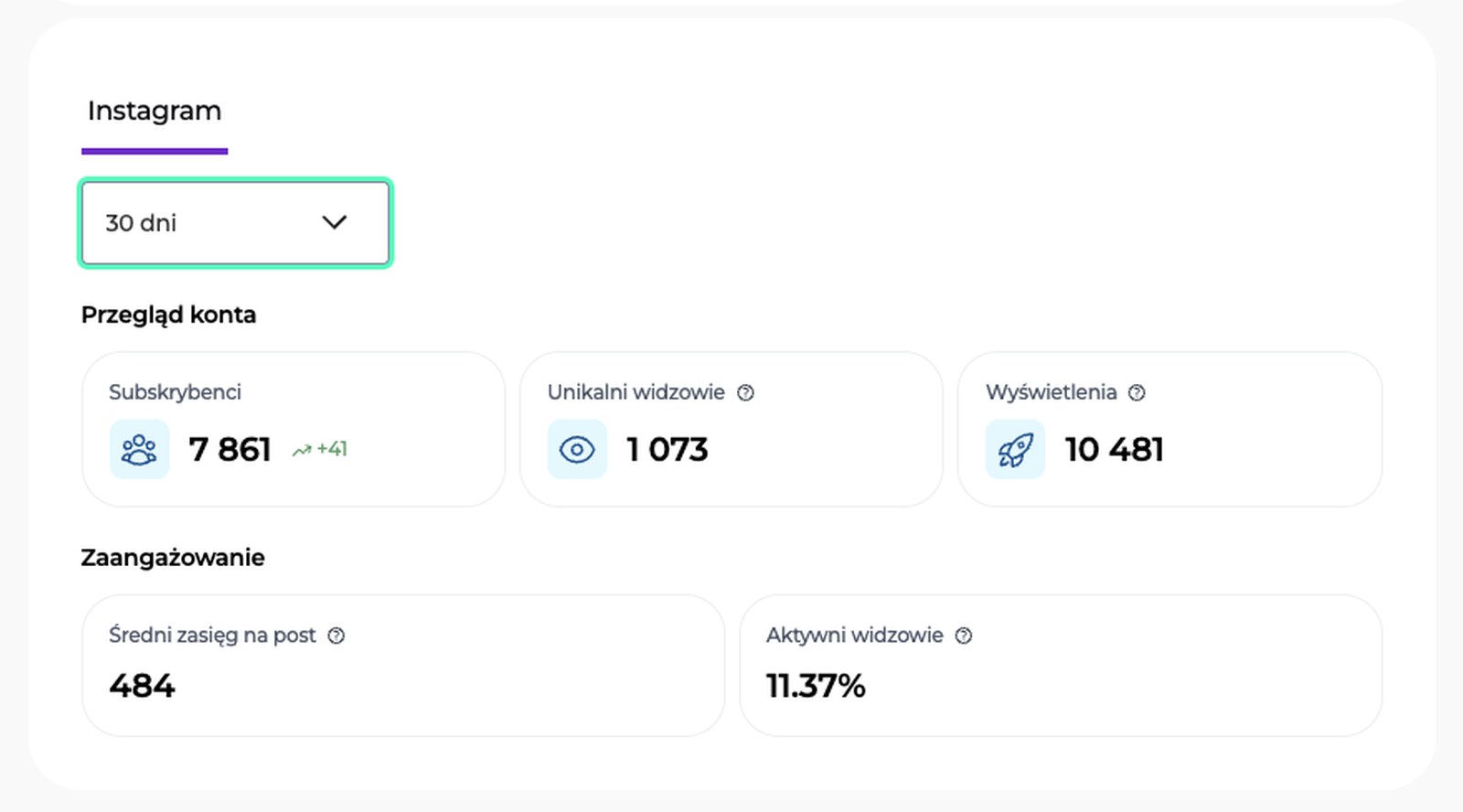
The overview shows followers with the change over the period, unique viewers, views, average reach per post and the share of active viewers. Exactly the numbers described above, and for the window you picked.
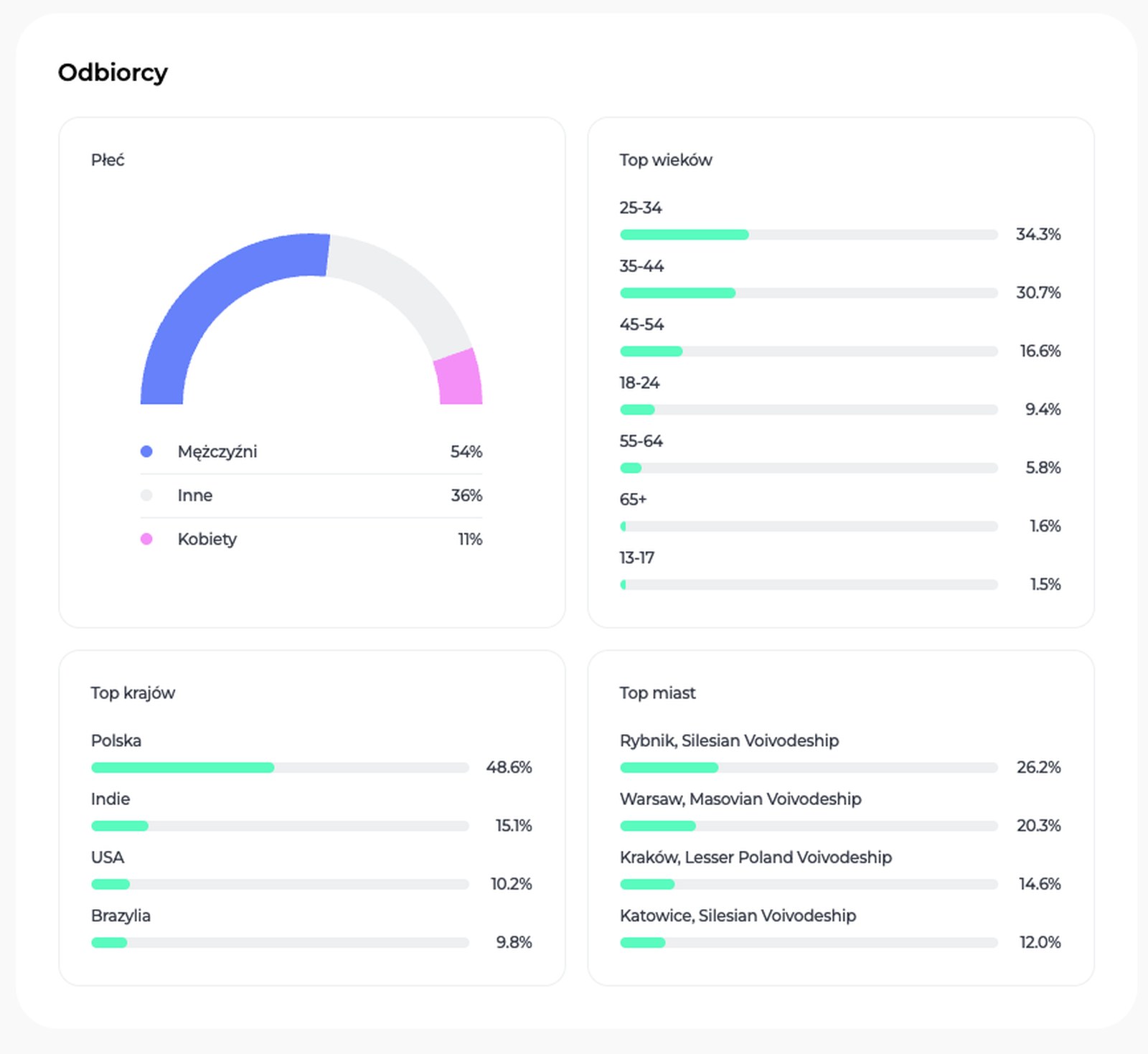
The audience section shows gender, age groups, countries and cities. In this example, an account with almost eight thousand followers has a Polish share below half. That is neither good nor bad in itself: reach for a Polish campaign is simply counted from that share, and it is better to know before the collaboration than after.
Separately there is a set of top-performing posts, each with views and interactions. The same “show me a few specific posts”, except you do not have to ask: what actually travelled is visible, and so is what did not.
All of it sits in one profile, next to the portfolio, categories and rates — before the first message.
Which criteria to use when choosing among applicants, we covered separately, and how to set the task so it is understood the first time — here.
Frequently asked questions
How do you check an influencer before a collaboration?
Ask for account statistics over 7, 30 and 90 days: followers, unique viewers, average reach per post, the share of active viewers, and the audience by country and city. Separately, ask for several specific posts with their view counts.
How do you spot inflated followers?
By several things together: growth spikes with no cause, a gap of tens of times between followers and reach, off-topic comments from accounts with no photos, and audience geography that does not match the language of the profile.
Can a screenshot of statistics be trusted?
As a hint yes, as proof no. A screenshot can be cropped, taken from a favourable period or assembled. Only what comes straight from the source — a connected account — is verifiable.
Which metric matters most?
Average reach per post. It shows how many people will actually see the post, and it is the number to weigh against the fee to get the cost of one contact.
How many followers should be “real”?
Counting the share is pointless, because it cannot be verified from the outside. It is more practical to look at reach: that is the part of the audience that will actually arrive.
What if part of the audience is in other countries?
That is normal. Recalculate reach for the country you care about and price against that number. Walking away only makes sense when the local share is too small for your goals.
Which services check influencers?
External audit services — HypeAuditor, TrendHero, LiveDune and similar. They work from indirect signals; exact data belongs to the account owner or to the platform the account is connected to.
What if a creator will not show statistics?
It is not an accusation, but it is not a reason to work blind either. Either ask again, explaining why, or pick someone whose data is open from the start.