Experiential marketing: how to plan active customer participation

Short answer
Experiential marketing involves customers in an activity that lets them explore a product or service themselves. Plan a specific trial, clear instructions, accessibility, participant limits and a next step. A creator can demonstrate participation rules and their own experience. Blogger Bank helps arrange that content order, while participant support and venue arrangements remain the brand's responsibility.
Experiential marketing starts with what the customer will do, not the scenery. Instead of just a display, plan a product trial, simple instructions and a moment of independent choice. A creator can show future participants this journey: explain how to join and what to expect. That content helps people feel more familiar with a new offer, but cannot replace efficient service on site.
Blogger Bank is an influencer marketing platform where brands commission content from creators. If you need a video showing participation in your activity, create a brand account and prepare a demonstration brief. Describe the participant's task, the location and the content required. You arrange the station, guest support and registration separately: the platform is neither a ticketing system nor an event agency.
The experience should help customers understand the offer
The Shopify guide to experiential marketing, checked on 9 November 2026, starts with direct participation in a brand experience. For a small shop, this raises a practical question: what will customers learn by trying something that a product photo cannot explain? The answer determines both the activity and the reason to invite people.
In a travel accessories shop, customers could adjust a backpack themselves and pack it with items provided. This is not simply entertainment beside a shelf. Afterwards, they should be able to explain what the compartments are for and whether the opening suits them. If they remember only the decoration, the brand has created an attraction, but has not necessarily explained the product.
Separate three elements in your plan. The event provides the occasion and setting. The sensory layer covers stimuli such as light, sound and texture. The experience describes what participants do and discover for themselves. These elements can coexist, but music and fragrance in a shop cannot replace an activity that helps people compare options knowingly.
Nor does every trial need to surprise passers-by. If your idea relies mainly on an unexpected incident in town, guerrilla marketing with creators is the relevant reference. Here, a repeatable customer journey matters more than surprise: arrival, instructions, trial, conclusion and an optional next step.
Define the action and takeaway before ordering decorations
Start the experience brief with: “Participants will do… to find out…”. Avoid “get to know the brand”, which does not tell staff what to enable. In the shop example: “Participants will pack a backpack to check access to things they need on the move.” This makes it easier to reject props that look impressive but explain nothing.
Choose a real customer concern, not the feature your team most enjoys presenting. Sales staff can collect questions that recur at the shelf: does an item fit, is adjustment easy, can the fastening be opened without putting the whole bag down? Do not turn the trial into a staged exercise with only one acceptable outcome. Participants may decide the model does not suit them.
- Action: what guests will do themselves instead of merely watching an employee.
- Evidence: what they will see or test during the trial without relying on an advertising promise.
- Takeaway: which difference between options they will be able to describe.
- Follow-up: where they can find the option they tested and whom they can ask questions.
This also helps assess a creator's suitability. Someone who clearly demonstrates adjustment and access to compartments may be more useful than a creator whose portfolio consists mainly of attractive interior shots. First decide what the content needs to explain; choose the filming style afterwards.
Guide customers from arrival to an independent trial
Instructions should be visible before the start. Explain whom the trial is for, whether advance registration is needed, what it involves and where help is available. If no purchase is required, say so explicitly. If participation has a condition, show it before people arrive, not only at the station. The creator's invitation and the information on site must describe the same offer.
Break the process into short, clear actions. An employee shows the starting point, the participant performs the task, then can compare an alternative or ask a question. Do not immediately overwhelm them with company history and the entire collection. If they must listen to a lecture, watch their belongings and follow instructions at once, it becomes difficult to notice the difference the trial was meant to explain.
Allow people to decline or stop without explaining themselves. Being filmed for advertising should not come as a surprise. The simplest arrangement is separate filming with the creator and a camera-free trial area for customers. If you plan to publish footage of recognisable people, agree the recording and usage rules with the person responsible before the event.
At the end, do not make customers recall everything from memory. Clearly identify the model or version tested, provide somewhere to ask questions and a way back to the information. A code leading to an unrelated homepage makes follow-up harder. Test it on a phone as a participant would at the exit, without a salesperson's help.
Accessibility and queues are part of the experience
Before promoting the activity, walk from the entrance to the station. Check passage space, whether the task can be done seated and whether instructions are readable. Do not base the entire task solely on small print, colour or audio. Offer another way to explore the product for people unable to complete the standard trial. These are design recommendations, not a declaration that every accessibility requirement has been met.
Run a trial with someone unfamiliar with the scenario. Observe where they wait for guidance, what they cannot reach and which questions they repeat. Measure the entire service time, including resetting the station for the next guest. Only then set participant limits and decide how to communicate waiting times. Do not base capacity on how many people fit into a shot.
The team should know who manages the queue, who explains the product and who solves problems. Agree a signal to pause invitations when the queue disrupts normal shop service. Prepare a message for when there is no space or trial products run out. A video may keep circulating after the activity ends, so dates and participation restrictions must be clear even without the post caption.
Practice scenario: a customer packs a backpack
The following is a workshop proposal, not a campaign report or a sales result. A shop wants to help people choosing a backpack for daily commuting. The station has items representing typical luggage and models available for comparison. Guests choose how to pack; an employee helps adjust the product according to its instructions rather than declaring a test winner.
- At the entrance, customers learn what the trial involves and where to check participation conditions.
- At the station, they identify the item they reach for most often on the move.
- They arrange the contents themselves and test access to that item. They can ask for help or watch a demonstration.
- They compare another arrangement or model and describe the difference in their own words.
- At the end, they receive information on finding the model again. The purchase decision remains theirs.
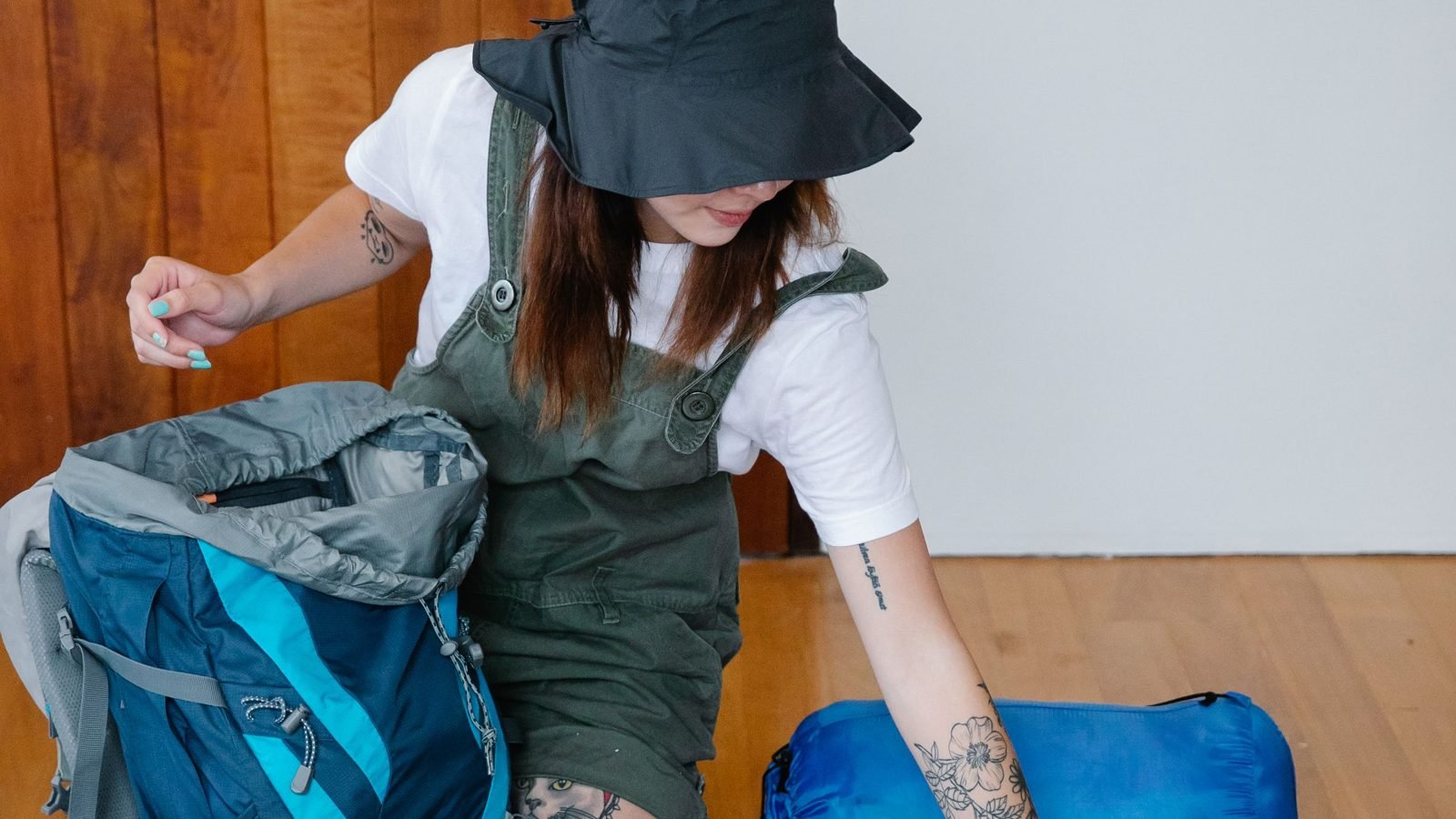
The creator follows the same journey in a separate session. They show not just the packed backpack on their shoulder, but also the question, trial and their own conclusion. If filming took place before the station opened to customers, do not present an empty shop as proof that there are no queues. Demonstration content should honestly preview participation, not pretend to be an account from a spontaneous visitor.
Ask creators to explain participation, not just report from the venue
Separate two deliverables in the brief: an invitation video and content showing the trial. The first must reach people while they can still take part. The second can explain the product for longer, but should not invite people to an event that has ended. Agree who updates availability information and what happens to the invitation once the activity finishes.
If you are organising a separate gathering for creators, find invitation logistics in the guide to creator events and press trips. In experiential marketing, however, do not imply that ordinary customers get the same arrangements. Special assistance, extra time and backstage access for a creator are not automatically part of the public offer.
Prepare a brief on Blogger Bank with the address, date, action to demonstrate, participation conditions and content format. Include required shots of the instructions and next step, the publication deadline, advertising disclosure and agreed video usage. Creators apply on the stated terms; you can review work samples in their profiles. Choose someone who can explain an activity, not just show a venue.
According to Blogger Bank's explanation of how it works, checked on 9 November 2026, messages, the contract and payment are tied to the order, and creators receive payment after the content is accepted. For this task, base acceptance on compliance with the agreement: a visible trial, accurate conditions and a clear invitation. Do not judge the completed demonstration against a sales promise that filming alone cannot guarantee.
Assess participation, understanding and the next step separately
Before starting, decide what staff will record: trials started and completed, people leaving the queue, questions after the demonstration and visits to product information. Do not count every passer-by as a participant or every video view as a visit. Define each event so employees count the same things even across shift changes.
After the trial, ask “What did you manage to test?” rather than suggesting an answer with “Is the backpack comfortable?”. An unprompted response helps reveal whether the instructions lead to the intended takeaway. Separate product problems from station problems. If people wanted to try but abandoned the queue, improve the arrangements before commissioning another creator invitation.
Sales after the activity matter, but an increase alone does not prove the experience caused it: other advertising, seasonality or changes to the offer may also have played a role. Report observations with that limitation. Start by choosing one customer action, test the instructions with someone outside the team, and turn the trial into a creator brief only once it works.
Frequently asked questions
What is experiential marketing?
Experiential marketing involves audiences in direct interaction with a brand, often through an activity they perform themselves. This could be a product trial, workshop or interactive demonstration that helps them understand the offer and their own needs.
What should customers do and understand when interacting with a brand?
Customers should perform a task connected to a real purchase decision and test a specific feature of the offer. For a backpack, that could mean packing and accessing belongings, rather than simply posing beside a display.
Does experiential marketing require a large event?
No. An experience can happen at a single station in a shop if customers have a clear task and can try it themselves. Scale should reflect staffing capacity, product availability and participant needs, not the desired visual effect.
How does experiential marketing differ from sensory marketing?
For planning purposes, separate customer actions from the stimuli accompanying a visit. Light, sound and texture form the sensory layer. The experience describes the participant's journey and what they learn through direct interaction with the offer.
How do you set participant limits for a product trial?
Test the full service process, including instructions, the task and resetting the station for the next person. Match capacity to available stations and staff. Also plan waiting information and a way to pause invitations when space runs out.
What role can an influencer play in experiential marketing?
A creator can follow the participant's journey, demonstrate the trial and explain participation conditions. Their content helps audiences decide whether to attend. However, they should not present special treatment during filming as the standard offer for every customer.
Does Blogger Bank organise customer events?
Blogger Bank supports brand collaboration with creators: commissioning content, choosing an author and managing order agreements. Brands separately arrange the space, guest support, station capacity and any registration; the platform does not replace an event organiser.
How can you check whether the experience helped customers?
Separate trials started and completed from content views. Ask participants what they tested themselves, and observe questions and subsequent actions. Assess sales alongside other campaigns and changes to the offer, without automatically attributing all growth to the activity.